
How Integrated Care Helped Rajesh Manage Type 2 Diabetes and Fatty Liver: A SETU Patient Story

Key takeaways
- Type 2 diabetes and fatty liver often share one root: insulin resistance, driven by diet, sleep, stress and inactivity.
- Over 6 months, Rajesh's HbA1c fell from 8.4% to 6.8%, and he lost 9 kg. His team included a physician, a clinical nutritionist and an Ayurvedic Vaidya.
- His physician reduced his medicine step by step, based on regular blood sugar readings.
- Integrated care works alongside modern medicine, not instead of it.
Meet Rajesh
Rajesh Patel is 48 and works as a bank branch manager in Ahmedabad. He was diagnosed with Type 2 diabetes five years ago. When he first came to SETU, he was taking metformin 1000 mg twice a day and glimepiride 1 mg every morning. A routine ultrasound had also shown grade 2 fatty liver.
"I was tired by four o'clock every day, and every check-up my doctor added another tablet," Rajesh told us. "My father was on insulin by the age of 55. I did not want the same path."
His starting numbers:
Marker
At first visit
Healthy target
HbA1c
8.4%
Below 7% for most adults with diabetes (ADA)
Fasting blood sugar
162 mg/dL
80 to 130 mg/dL
Weight / BMI
91 kg / 30.8
BMI below 23 (Asian Indian cut-off)
Waist circumference
104 cm
Below 90 cm for men (Indian guidelines)
Liver
Grade 2 fatty liver, ALT 72 U/L
No fatty change, ALT within lab range
Triglycerides
236 mg/dL
Below 150 mg/dL
Why diabetes and fatty liver go together
India has an estimated 101 million people living with diabetes (ICMR-INDIAB study, 2023). Many of them also have fatty liver, now called MASLD. Both conditions come from insulin resistance. The body's cells stop responding well to insulin, so sugar stays in the blood and the liver stores the extra energy as fat.
Ayurveda describes this pattern as weak Agni (digestive and metabolic fire) and a build-up of Ama, and links it to Prameha. You can read more in our guide to Understanding Agni. The two systems describe the same problem in different words, which is why SETU treats it with both.
Step 1: Understanding his story
Rajesh's first visit was a 90-minute joint consultation with all three clinicians.
- Dr. Vivek Nanda (Lifestyle Medicine Physician) reviewed his medicines and ordered HbA1c, a lipid profile, liver and kidney function tests, fasting insulin, and vitamin B12 and D levels. He also screened for eye, foot and kidney complications. None were found.
- Dt. Riddhi Nanda (Clinical Nutritionist) went through a 3-day food and sleep diary with him. Three patterns stood out: dinner after 10 pm, four cups of sweetened tea a day, and farsan or biscuits at his desk. He was also sleeping less than 6 hours a night.
- Vaidya Swapnil Modi (BAMS, 17+ years) carried out Nadi Pariksha and a Prakriti assessment. He found a Kapha-dominant constitution with a Kapha-Pitta imbalance.
Step 2: His integrated treatment plan
Area
What Rajesh did
Why it helps
Modern medicine
Stayed on his tablets, logged his sugars every week, and changed doses only on the doctor's advice
Keeps him safe and prevents low sugar as his diet changes
Nutrition (Aahar)
Used a simple Indian plate: half sabzi and salad, a quarter dal, paneer or sprouts, and a quarter bajra, jowar or brown rice. Ate dinner by 7:30 pm. Switched to unsweetened tea, with roasted chana as his desk snack.
Reduces sugar spikes after meals and lowers liver fat
Lifestyle (Vihar)
Walked briskly for 30 minutes every morning and for 10 minutes after lunch and dinner. Kept a fixed bedtime of 10:30 pm, with no screens after 10.
Improves insulin sensitivity and sleep
Ayurveda and Panchakarma
Completed SETU's 21-Day Metabolic & Gut Reset: 6 days of Deepana-Pachana, then 8 days of medicated Basti with Abhyanga and Udvartana
Supports digestion and metabolism, in line with classical Ayurvedic practice
Stress
Had Shirodhara sessions during the reset and practised 10 minutes of slow breathing daily
Stress raises cortisol, which raises blood sugar
People with diabetes need close supervision during Panchakarma. Rajesh's blood sugar was checked twice a day throughout his therapy. When his fasting readings dropped below 100 mg/dL in week 2, Dr. Nanda stopped his glimepiride to avoid low sugar.
Step 3: Follow-up and small adjustments
Rajesh had follow-up visits every 2 weeks for the first 3 months, then once a month. He repeated his blood tests at 3 months and 6 months. His nutrition plan was adjusted four times, based on his sugar log and how hungry he felt.
"The hardest part was my evening tea with biscuits," he said. "Riddhi ma'am did not just say stop. She gave me roasted makhana and masala chaas instead, and after two weeks I did not miss it."
Rajesh's results after 6 months
Marker
Start
3 months
6 months
HbA1c
8.4%
7.4%
6.8%
Fasting blood sugar
162 mg/dL
134 mg/dL
118 mg/dL
Weight
91 kg
86 kg
82 kg
Waist
104 cm
99 cm
95 cm
Liver
Grade 2, ALT 72 U/L
ALT 51 U/L
Grade 1, ALT 38 U/L
Triglycerides
236 mg/dL
188 mg/dL
152 mg/dL
Medicines
Metformin 2000 mg + glimepiride 1 mg
Metformin 2000 mg
Metformin 1000 mg
Rajesh's diabetes is now well controlled on half his original metformin dose, and he no longer takes glimepiride. His diabetes has not gone away, and he still sees his team every 3 months. These results come from following the plan closely, and they are not a guarantee for everyone.
What our team learned from cases like Rajesh's
Diabetes and fatty liver improve together when you treat their shared cause.
Meal timing and sleep matter as much as what is on the plate.
Ayurvedic therapy works best alongside prescribed medicine, not as a replacement for it.
Regular blood sugar checks keep treatment safe, and they keep patients motivated.
Is integrated diabetes care right for you?
It may suit you if you have Type 2 diabetes, prediabetes, insulin resistance or fatty liver. It is for people who want to depend less on rising medicine doses, under a doctor's supervision. It is not a replacement for emergency care. People with Type 1 diabetes, advanced kidney disease, or diabetes during pregnancy need a specially modified plan.
Book a 60 to 90 minute integrated consultation at SETU Holistic Hospital, The Orion, 708 to 712, Sarkhej-Gandhinagar Highway, near Shree Balaji Temple, Ahmedabad. Call +91 77-8989-1000 or book online.
About the author
Dt. Riddhi Nanda is a Clinical Nutritionist, Certified Lactation Consultant and co-founder of SETU Holistic Hospital. She holds a Diploma in Ayurveda in Nutrition and is a lifetime member of the Nutrition Society of India. She focuses on lifestyle and metabolic disorders and on Ahar-Vihar based nutrition.
Medically reviewed by
Dr. Vivek Nanda is a Lifestyle Medicine Physician and the Founder and Director of SETU Holistic Hospital. He holds a DNB in Emergency Medicine and an FCCS in Critical Care (USA), and is a member of the Indian Society of Lifestyle Medicine.
Frequently asked questions
1. Can Type 2 diabetes go into remission? Yes, for some people. Experts define remission as an HbA1c below 6.5% for at least 3 months after stopping all diabetes medicine. It is more likely when diabetes is caught early and weight is reduced. Remission is not a cure, so regular checks are still needed.
2. Can I stop my diabetes medicine if I start Ayurvedic treatment? No, not on your own. At SETU, only the treating physician changes your medicine, step by step, based on your blood sugar readings. Stopping medicine suddenly can cause dangerously high sugar levels.
3. Is Panchakarma safe for people with diabetes? It can be, with supervision. Therapies such as Basti and Udvartana are planned around your sugar levels, which are checked during treatment. Some procedures are avoided in people who have low sugar episodes, infections or advanced complications.
4. Can fatty liver be reversed with diet and lifestyle? In many people, early fatty liver improves with weight loss, less sugar and refined carbohydrate, more activity and no alcohol. Studies show that losing 7 to 10% of body weight can reduce liver fat a lot. A doctor should track your progress with blood tests or an ultrasound.
5. How soon will I see results? Many patients see their fasting sugar change within 2 to 4 weeks. HbA1c shows your average sugar over the past 3 months, so it is usually rechecked at 3 and 6 months.
6. What is the best diet for Type 2 diabetes in India? There is no single diet that suits everyone. A plate that is half vegetables, a quarter protein (dal, paneer, eggs or sprouts) and a quarter whole grains or millets works for many people. When you eat and how much matter as much as what you eat.
7. Who will treat me at SETU? A team of three: a lifestyle medicine physician, a clinical nutritionist and an Ayurvedic Vaidya. You meet all three together in your first 60 to 90 minute consultation, and they plan your care jointly.
8. Where is SETU Holistic Hospital? The Orion, 708 to 712, Sarkhej-Gandhinagar Highway, near Shree Balaji Temple, Ahmedabad, Gujarat 382481. Call +91 77-8989-1000 or +91 77-8989-2000.
References
American Diabetes Association. Standards of Care in Diabetes 2025. Diabetes Care, 2025.
Anjana RM et al. Metabolic non-communicable disease health report of India: the ICMR-INDIAB national cross-sectional study (ICMR-INDIAB-17). Lancet Diabetes & Endocrinology, 2023.
Riddle MC et al. Consensus report: definition and interpretation of remission in type 2 diabetes. Diabetes Care, 2021.
Vilar-Gomez E et al. Weight loss through lifestyle modification significantly reduces features of nonalcoholic steatohepatitis. Gastroenterology, 2015.
Clinical & Medical Disclaimer: The information provided in this article is for educational and informational purposes only and does not constitute formal medical diagnosis or advice. Chronic conditions such as diabetes, cardiovascular disease, hypertension, and autoimmune disorders require personalized clinical evaluation and continuous physician oversight. Never modify, taper, or discontinue prescribed pharmaceutical medications without explicit supervision from your primary treating physician.
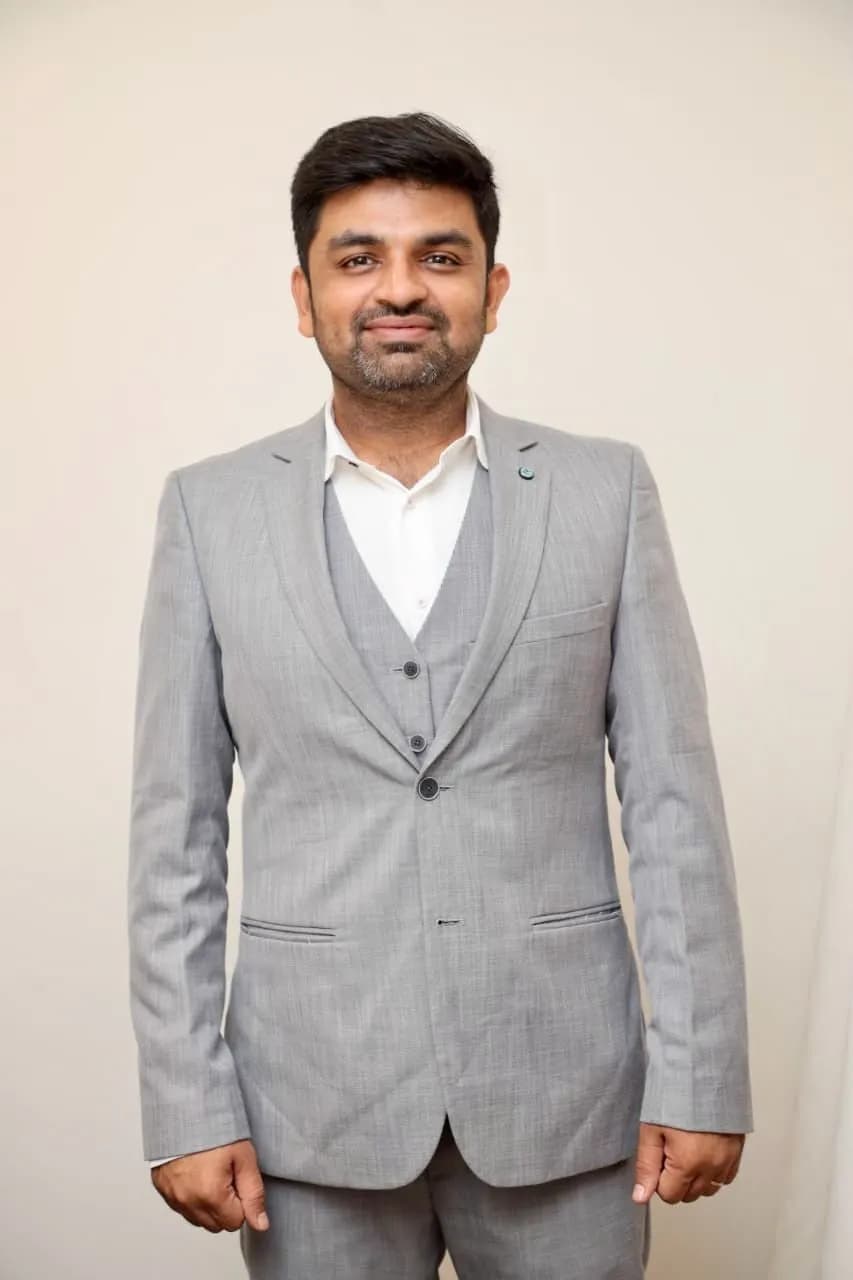
Dr. Vivek Nanda
Lifestyle Medicine Physician • SETU Holistic Hospital Ahmedabad
This article was authored as part of SETU Holistic Hospital's evidence-based clinical education initiative, bridging modern medical diagnostics with authentic Ayurveda and precision clinical nutrition.
View Full Clinical Credentials & BioHave questions about this condition?
Our multidisciplinary board is here to evaluate your biomarkers and design an integrative protocol.